
Apple Tap to Pay in Malaysia
For many SMEs, payment collection is still treated as the final step of a sale.
In reality, it is one of the most important drivers of cash flow.
A deal may be closed, an invoice may be issued, and the customer may be ready to pay, but delays often happen because the payment process itself creates friction. A missing card terminal, a delayed bank transfer, an off-site sales appointment without payment tools, or disconnected payment records can all slow down revenue collection.
For growing businesses, these small operational gaps create larger financial consequences- delayed receivables, weaker cash flow visibility, slower reconciliation, and less confident business decisions.

This is why Apple’s Tap to Pay on iPhone launch in Malaysia matters.
It is not simply a payment feature. It represents a shift in how businesses can collect payments faster, reduce dependency on payment hardware, and improve financial visibility across the organisation.
Why Traditional Payment Terminals Are Becoming Less Attractive
For years, accepting card payments meant relying on separate payment terminals.
While effective, these systems often come with added costs and operational dependency—hardware rental, maintenance, onboarding, device management, and limited flexibility for businesses operating outside fixed counters.
This creates challenges for businesses such as:
Every additional terminal creates another operational layer to manage.
Tap to Pay changes that model.
With Tap to Pay on iPhone, businesses can accept contactless payments directly from an iPhone without requiring additional card readers or payment terminals. Supported payment methods include physical debit and credit cards, Apple Pay, and other digital wallets, making payment collection faster and more flexible.
For SMEs focused on speed and operational efficiency, this reduces unnecessary friction at the point where revenue matters most.
Payment Collection Is a Cash Flow Strategy
Many business owners still see payment collection as an administrative task.
Strong finance leaders see it differently.
The speed of payment collection directly affects working capital. The longer invoices remain unpaid, the more pressure builds across supplier payments, payroll planning, operational spending, and growth decisions.
Faster collections improve more than cash flow, they improve control.
Imagine a consultant completing a project review and collecting payment immediately on-site. Or a retail staff member processing payment directly during checkout without redirecting customers to another counter. Or an events team closing walk-in registration payments instantly during roadshows.
The sale closes faster. The receivable disappears sooner. The business gains liquidity earlier.
That is not just convenience, it is financial discipline.
The Stronger Business Case: Tap to Pay + Zoho Books
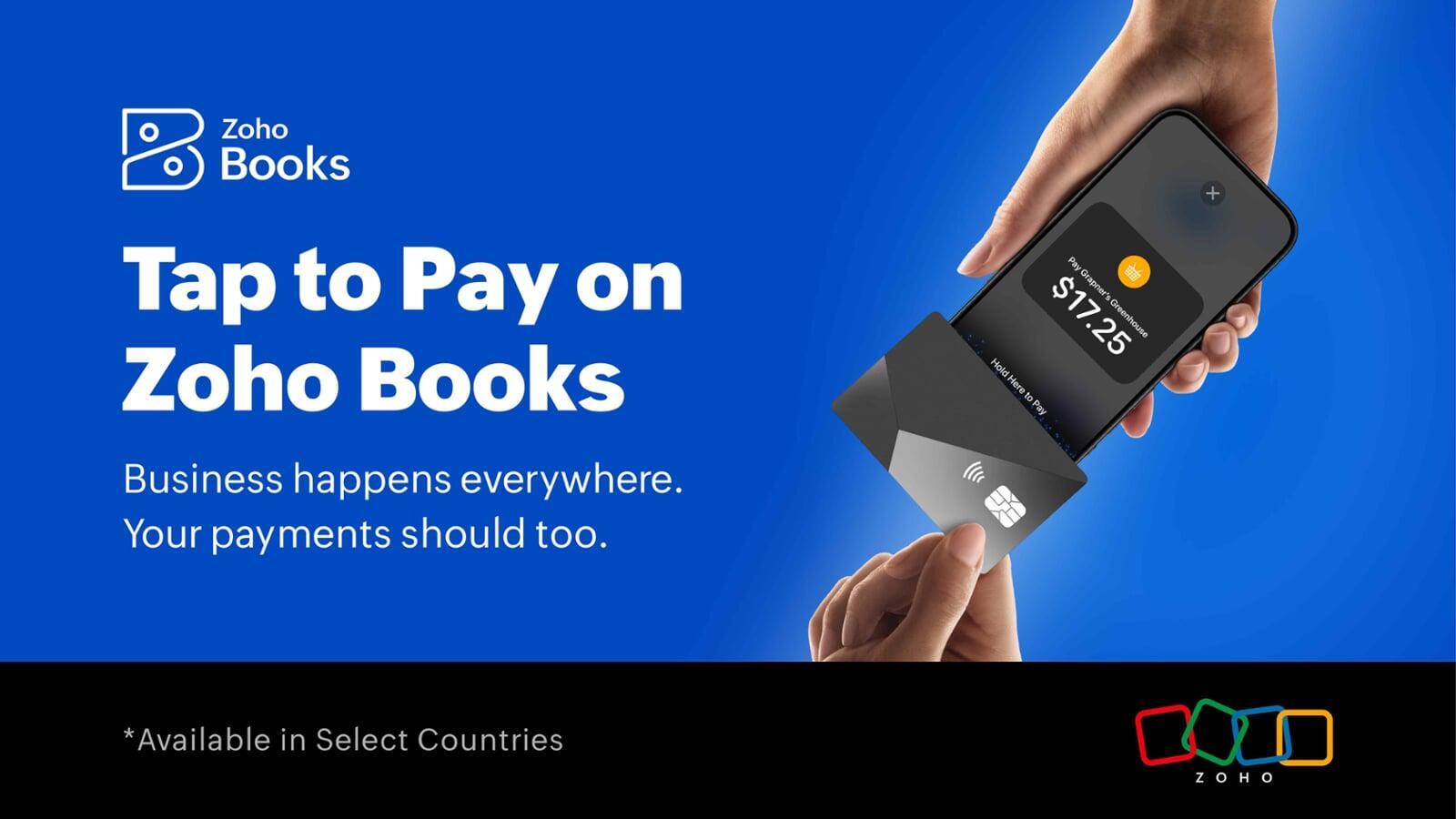
The real value of Tap to Pay is not simply accepting payments on an iPhone.
It is what happens after the payment is collected.
The workflow is simple and operationally powerful:
Invoice opened → Tap “Tap to Pay” → Customer makes contactless payment → Invoice status updates → Payment is recorded → Reconciliation becomes faster

This matters because many SMEs still operate with disconnected payment systems:
This creates familiar problems:
By connecting payment collection directly to accounting workflows, businesses reduce manual dependency and improve financial confidence.
That is where operational efficiency becomes strategic advantage.
Why Finance Teams Should Care About Payment Visibility
Collecting payment faster is important.
Knowing exactly where that payment sits inside your financial records is even more important
Finance teams need visibility, not assumptions.
When invoice payments update faster and reconciliation becomes cleaner, decision-makers gain stronger control over:
Without this visibility, leadership decisions become reactive.
With it, finance becomes proactive.
This is why modern SMEs should think beyond payment acceptance and focus on payment intelligence.
Tap to Pay is valuable because it shortens the gap between customer payment and financial clarity.
Malaysian SMEs Should Prepare for This Shift Now
Customer expectations are changing quickly.
People expect faster, smoother, and more flexible payment experiences. Whether in-store, on-site, or during mobile sales interactions.
Businesses that continue relying only on traditional payment flows risk creating unnecessary delays that customers increasingly notice.
This does not mean every SME should immediately replace every payment terminal.
It means leaders should start asking better operational questions:
These are business questions, not technology questions.
And solving them often delivers immediate ROI.
Apple’s Tap to Pay launch signals a broader shift toward embedded finance operations, where payment collection, accounting visibility, and financial decision-making work together.
That is where competitive advantage lives.
Final Thought: The Future of SME Finance Is Operational Simplicity
The best financial systems are rarely the most complex.
They are the ones that quietly remove friction.
They make payments easier, collections faster, reconciliation cleaner, and decisions stronger.
Tap to Pay on iPhone matters not because it removes a card machine, but because it improves how businesses get paid. For Malaysian SMEs focused on growth, the real opportunity is not simply accepting contactless payments.
Financial clarity.
That is where sustainable growth begins.